


Waste Management for Business: New Rules and Corporate Responsibility
11/05/2026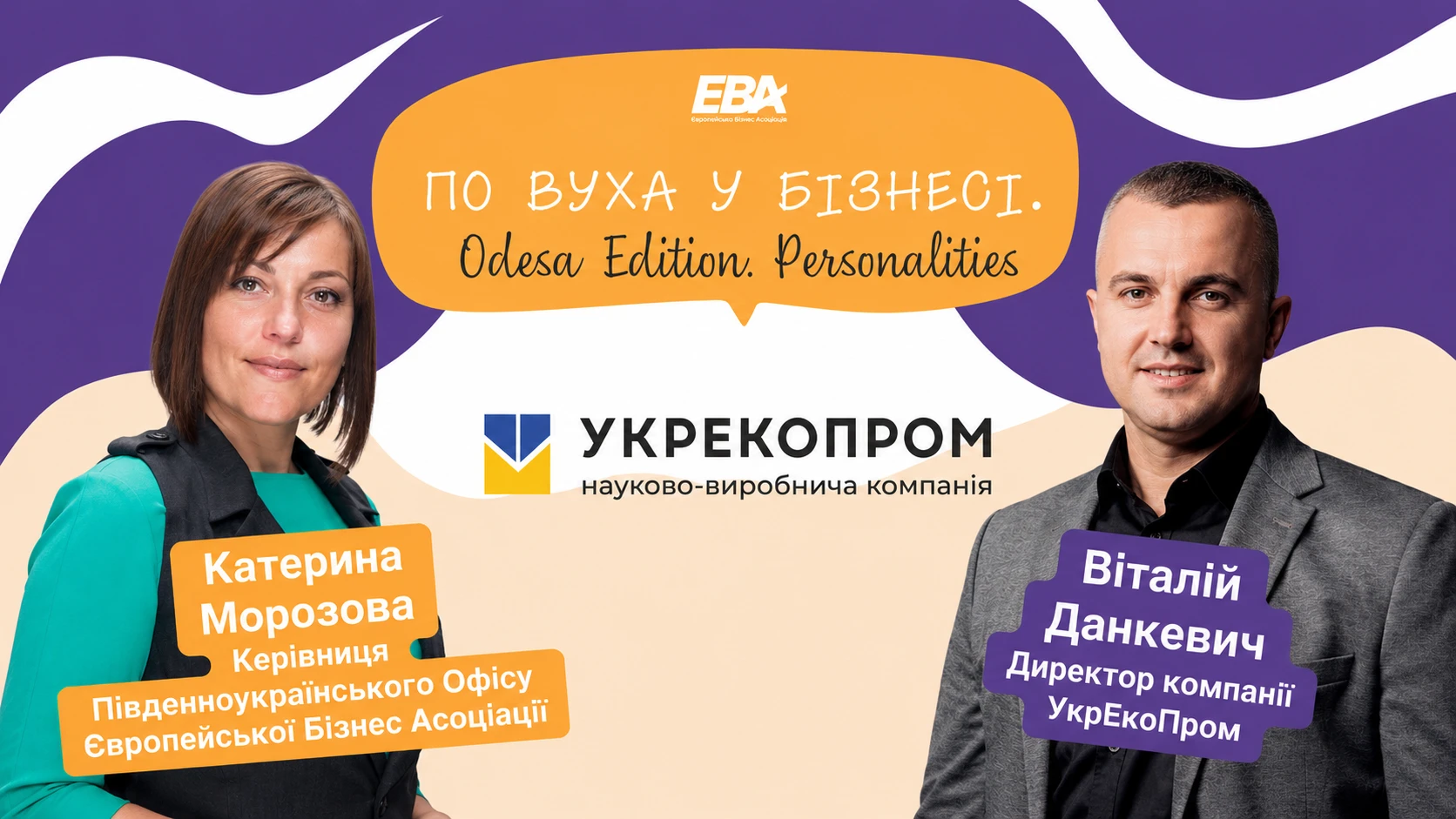
Today, waste management is no longer just a formal requirement or a secondary issue for businesses. Ukraine is gradually changing its approach to waste management by implementing European standards, strengthening legislation, and increasing transparency and control over waste flows. These topics were discussed in the latest episode of the “Po vukha u biznesi – Odesa Edition” podcast together with the European Business Association and Vitalii Dankevych, CEO of UKRECOPROM.
From “collect and forget” to systematic waste management
For many years, waste management for businesses often meant simply finding a contractor to remove waste and signing the necessary documents.
Today, this approach is no longer sufficient. Modern legislation requires businesses not only to transfer waste but also to understand:
- what types of waste are generated,
- how they are classified,
- which waste codes apply,
- who processes the waste,
- and what happens to it after collection.
Ukraine is gradually moving toward a European-style waste management system, where responsible waste handling becomes part of overall business operations.
Common mistakes businesses make
Businesses may:
- incorrectly classify waste,
- assign wrong waste codes,
- fail to keep records,
- choose contractors based only on price,
- or never verify what actually happens to waste after transfer.
This is where the biggest risks arise. Responsibility does not disappear once waste leaves the company’s territory. The company that generated the waste still remains responsible for it.
Waste management is no longer only about ecology
Improper waste management today can lead to:
- legal risks,
- fines,
- reputational damage,
- problems with international partners,
- and environmental and public health risks.
This is especially important for companies working with international markets or striving to meet European standards.
War and new challenges
The war has also significantly affected the waste management sector:
- logistics became more complicated,
- transportation costs increased,
- part of the infrastructure was damaged or operates with limitations.
However, environmental responsibility has not disappeared. Uncontrolled waste management may create even greater risks for people and the environment.
Waste management as part of business strategy
Today, businesses are beginning to view waste management more strategically. It is no longer just about compliance.
It is about:
- transparency,
- control,
- responsibility,
- and long-term business sustainability.
This approach is gradually becoming the new standard for Ukrainian businesses.
🎧 Listen to the full podcast episode:
SoundCloud: https://on.soundcloud.com/a6GXJe8MimQbWm2M2e
Apple Podcasts: https://podcasts.apple.com/


